
 By John Mercado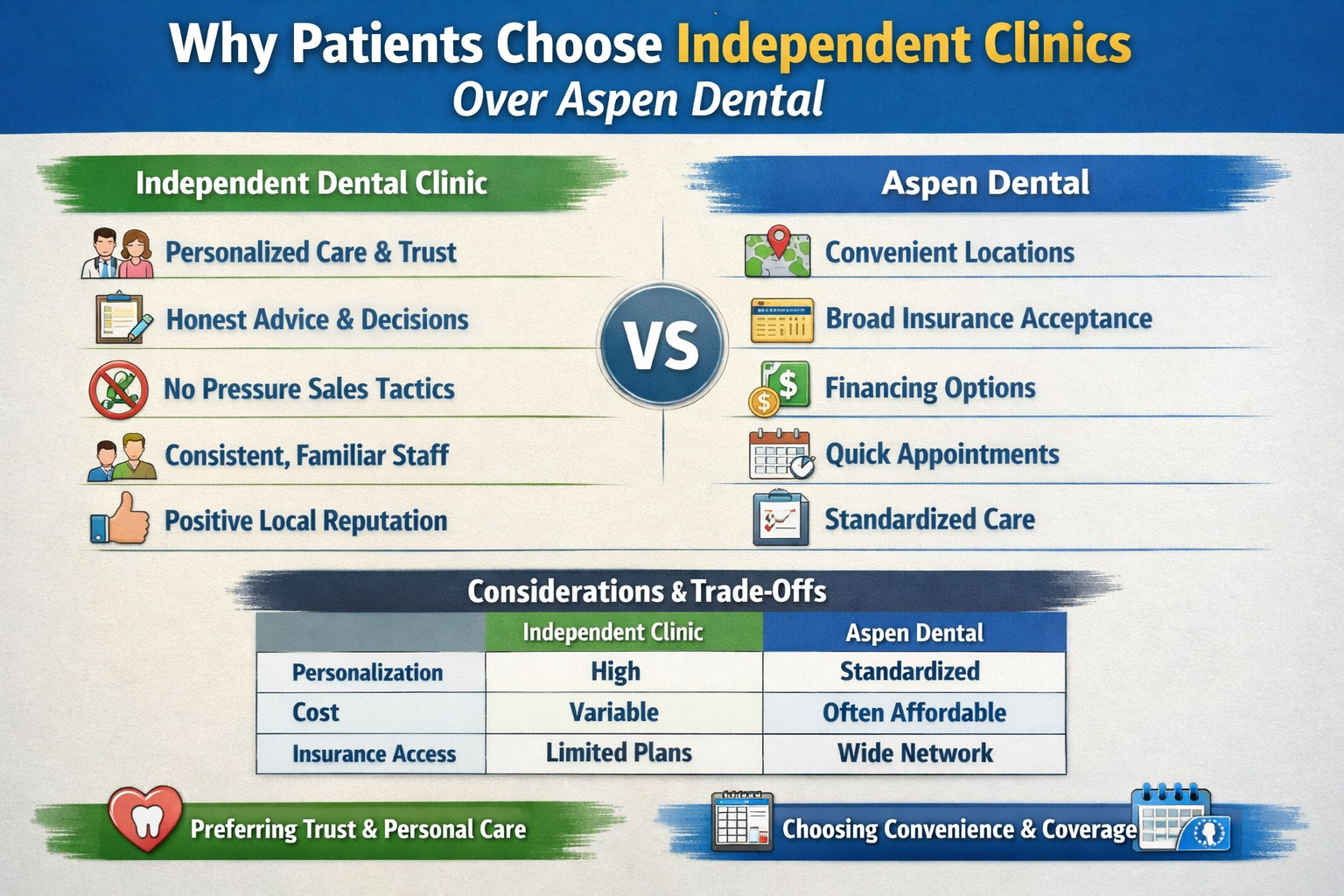
In an era dominated by corporate convenience and healthcare consolidation, a quieter countertrend is gaining momentum. Patients who feel reduced to transactions are deliberately returning to independent dental clinics.
This shift is not about nostalgia or resistance to modern systems. It reflects a calculated preference for a different care philosophy, incentive structure, and patient relationship.
Relationship Is the Business Model
At an independent dental practice, the dentist’s success is inseparable from their long-term reputation within the community. Unlike corporate chains such as Aspen Dental, growth is not measured by quarterly production metrics or same-store revenue targets.
Patient loyalty is not optional. It is existential.
This creates a fundamentally different dynamic:
- Care is built over years, not visits
- Families often stay with the same provider for generations
- Dentists understand patient history, preferences, and anxieties
- Staff continuity, including hygienists, reinforces trust
This continuity enables genuine preventive care rather than episodic intervention.
A Philosophy of Conservative Dentistry
Independent dentists typically operate without corporate production pressure. That freedom directly affects clinical decision-making.
Instead of defaulting to immediate intervention, independent providers can practice watchful waiting when appropriate. A small cavity can be monitored. Early gum inflammation can be addressed through hygiene and education rather than aggressive procedures.
The goal is preservation, not maximization.
This approach aligns incentives naturally:
- Preserving natural teeth benefits long-term health
- Long-term health sustains long-term patient relationships
- Long-term relationships sustain the practice
There is no upside in overtreatment when the dentist expects to care for the same patient for decades.
Autonomy in Diagnosis and Pricing
In an independent clinic, the dentist owns the practice and makes the final clinical decisions. There are no regional managers reviewing treatment acceptance rates or benchmarking procedures against national averages.
That autonomy extends to pricing.
Fees are typically set based on local market realities rather than national financial models. Patients are more likely to encounter:
- Transparent explanations of treatment options
- Clear pricing without bundled pressure
- Fewer sales-driven financing conversations
This does not mean independent clinics are cheaper in every case. It means pricing logic is visible and explainable.
The Environment Matters
Independent practices tend to feel different because they are different.
From the décor to appointment pacing, the environment reflects the practitioner rather than a brand manual. Appointments are less likely to be double-booked. Patients are not treated as throughput units.
The experience often feels more professional than retail, more deliberate than transactional.
That atmosphere is not accidental. It is a direct result of incentives that favor time, attention, and continuity over volume.
The Trade-Offs Are Real
Independent clinics do not compete on scale.
They may lack:
- National advertising reach
- 24/7 centralized call centers
- Uniform same-day financing options
- Standardized technology rollouts
Technology investments tend to be strategic rather than synchronized. Convenience features are added when they improve care, not when mandated by a corporate playbook.
For many patients, this is not a drawback. It is a filter.
Why the Shift Is Happening
Patients are increasingly informed. They compare treatment plans, question urgency, and seek second opinions. When they do, the differences between corporate and independent models become difficult to ignore.
Choosing an independent clinic is less about rejecting corporate dentistry and more about selecting alignment.
Alignment between:
- Clinical judgment and patient outcomes
- Incentives and ethics
- Time spent and trust built
Patients are not opting out of modern dentistry. They are opting into healthcare relationships where the decision-maker is also the practitioner.
The Bottom Line
Independent dental clinics appeal to patients who value continuity, conservative care, and autonomy over scale and convenience.
In a healthcare environment increasingly shaped by corporate efficiency, independent practices offer something structurally different: patient-centric care where the only bottom line is long-term health.
That is not sentimentality. It is strategy.
And patients are proving it by where they choose to sit in the chair.